
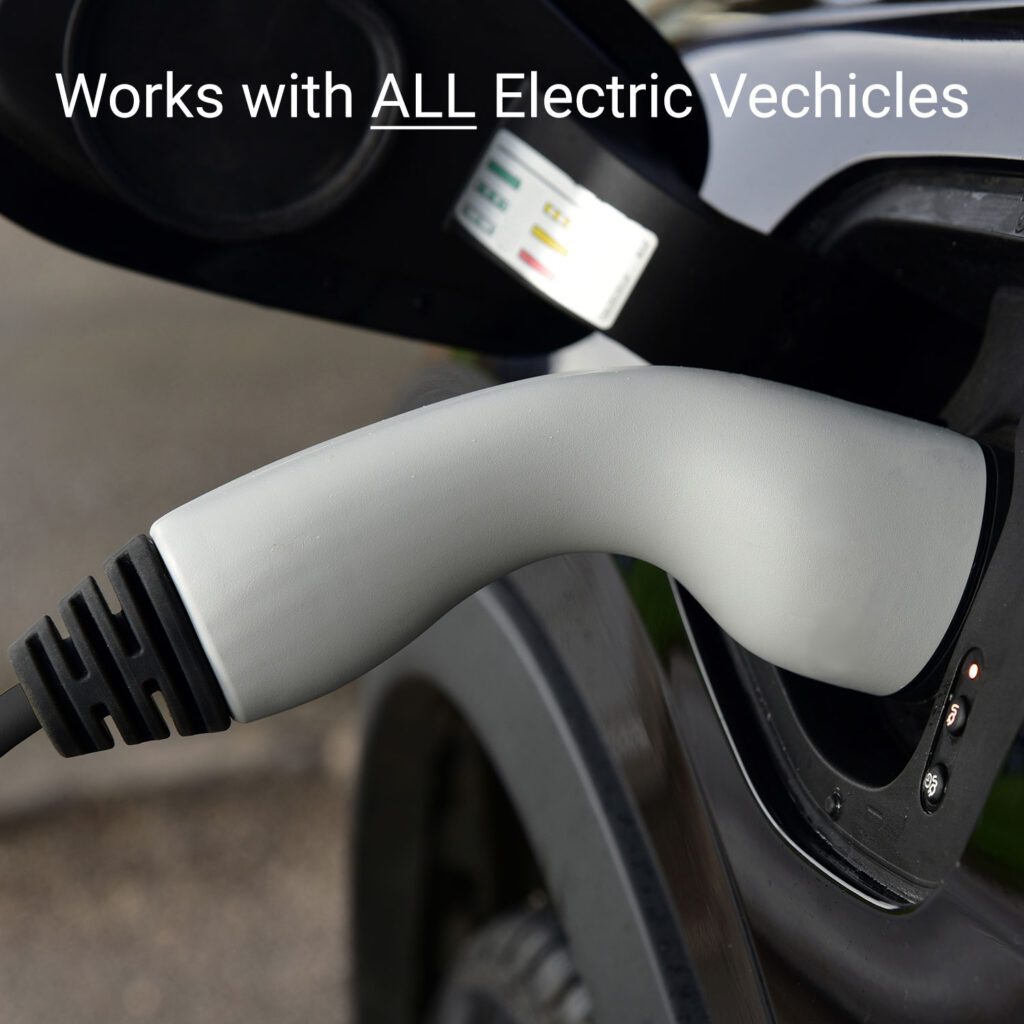
EV drivers choose where to shop, work, stay and live partly based on where they can charge. For property managers, condo boards, business owners and fleet operators in Miami-Dade and Broward, adding charging stations is now a practical infrastructure decision, not a marketing experiment. This guide covers what a commercial EV charging project involves: charger types, electrical capacity, condo rules, payments, Florida regulations and the incentives available in 2026.
Looking for a charger for your own home instead? Read our Level 2 home EV charger guide.

Which Properties Benefit from Commercial EV Charging
- Condominiums and apartment buildings: residents increasingly expect charging, and it supports occupancy and property value.
- Office buildings and workplaces: employee charging during the workday, a common amenity for tenant retention.
- Retail centers, restaurants and hotels: drivers stay longer while they charge, and charging can be a paid service.
- Fleets: delivery vans, service trucks and company cars that return to a depot every night.
Level 2 vs. DC Fast Charging for Businesses
The right charger depends on how long vehicles stay parked. Matching the charger to the dwell time is what keeps a project within budget.
| Commercial Level 2 | DC Fast Charging (Level 3) | |
|---|---|---|
| Typical power | About 6–19 kW per port | About 50–350 kW per port |
| Electrical service | 208V or 240V, often on existing service | Usually 480V three-phase, often with a new transformer |
| Charging time | Several hours | Roughly 20–60 minutes for a substantial charge |
| Best for | Condos, apartments, offices, hotels, overnight fleets | Retail, highway sites, high-turnover lots, fleets that charge between shifts |
| Relative cost | Lower equipment and installation cost | Much higher equipment, utility and installation cost |
Many commercial buildings in South Florida have 208V three-phase service rather than 240V. Level 2 chargers on 208V deliver somewhat less power, so we size the system based on your actual service, not the charger’s maximum rating.
Connectors: J1772, CCS and NACS
- J1772: the long-standing Level 2 connector in North America. Tesla and other NACS vehicles can use it with an adapter.
- CCS1: the DC fast-charging connector used by many non-Tesla EVs.
- NACS (SAE J3400): the Tesla-style connector that most automakers are now adopting.
Because the market is in transition, we generally recommend stations with dual connectors or field-swappable cables. That way the investment keeps serving every driver for years.
Planning the Electrical Side
Electrical capacity, not the charger itself, usually determines the size and cost of a commercial project. Our planning covers:
- Load calculation: how much spare capacity your existing service has, based on the building’s actual demand.
- Load management: networked chargers can share a single circuit or capacity limit and balance power between vehicles. This lets you install more ports without upgrading the service.
- Utility coordination: when new service or a transformer is needed, we coordinate the application and timeline with FPL.
- Trenching, conduit and pedestals: including bollards, signage and accessible-space layout.
- Future-proofing: installing extra conduit now for additional spaces costs far less than trenching again later.
If your parking lot also needs new lighting, doing both projects together means one round of trenching and one permit process. See our parking lot lighting services.
Condominiums and Multifamily Buildings
Condo associations in Miami and Broward face two situations: owners requesting individual chargers, and boards evaluating shared charging for the building.
- Individual owner requests: under Section 718.113(8), Florida Statutes, a unit owner may install a charger in their assigned limited common element parking space, at their own cost and with separate metering. The association may set conditions such as code compliance, architectural standards, experienced contractors and insurance.
- Building-wide or shared charging: a planned system lets the association control capacity, billing and placement, instead of approving one owner request at a time until the electrical room runs out of room.
We can assess the building’s electrical rooms and garage, and give the board a clear plan with phasing options and an estimate for each phase.
Networked Chargers, Payments and Revenue
Networked commercial chargers connect to software that lets you:
- Restrict access to residents, employees or fleet vehicles, or open stations to the public
- Set pricing per kWh, per hour or per session, plus idle fees to keep spaces turning over
- Track usage and energy costs, and recover electricity costs from drivers
- Receive alerts when a station needs service
Florida Rules and Incentives in 2026
- State-level regulation: since July 1, 2024 (Senate Bill 1084), the regulation of EV charging stations in Florida is set by the state, and the Florida Department of Agriculture and Consumer Services oversees it. Local EV charging mandates, such as Miami-Dade’s earlier requirement for EV-ready spaces in new developments, can no longer be enforced. Standard building and electrical permits are still required.
- FPL Make-Ready Credit: FPL has offered a make-ready credit for businesses, multifamily properties and fleets of up to about $1,200 per Level 2 port, and $20,000–$50,000 per DC fast-charging port, on a first-come, first-served basis. Availability changes, so we confirm current funding before you budget around it.
- Federal 30C tax credit: this credit ended for charging equipment placed in service after June 30, 2026.
Commercial Charging Equipment We Install
We install wall-mounted and pedestal Level 2 stations and DC fast chargers from leading manufacturers, including PowerPump, ChargePoint, Wallbox, Blink and Tesla commercial Wall Connectors. Spec sheets for the PowerPump Level 2 stations we install:
- PowerPump ACLF22100 Level 2 Charging Station (PDF)
- PowerPump ACL22100 Level 2 Charging Station (PDF)
- PowerPump AC5500 Level 2 Charging Station (PDF)

Our Commercial EV Charging Installation Process
- Site assessment: parking layout, electrical rooms, service capacity and how vehicles will use the site.
- Design and load calculation: number of ports, charger type, load management and phasing.
- Permits and utility coordination: building permits, plus any FPL service or incentive applications.
- Installation: trenching, conduit, pedestals, protection bollards and charger mounting by our licensed team.
- Commissioning: testing, network activation, pricing and access settings, and staff training.
- Ongoing support: troubleshooting, maintenance and expansion when demand grows.
Pair EV Charging with Solar and Storage
Commercial chargers add significant load to a property. Commercial solar can offset that energy. Battery storage can help limit peak demand on commercial rate plans that bill for it, and keep critical loads running during outages. See also our EG4 energy storage systems.
Commercial EV Charging FAQs
How many charging stations should we install?
Start with how many EVs park at the site today and how long they stay, then plan conduit for future growth. Many properties begin with a few Level 2 ports and add more on the same infrastructure.
How long does a commercial EV charging project take?
A small Level 2 project on existing service can be completed in a few weeks, including permitting. Projects that need new FPL service or a transformer, or that involve DC fast chargers, take longer because of utility lead times.
Can we charge drivers to use our stations?
Yes. Networked chargers let you set pricing by energy, time or session, add idle fees, and limit access to specific users.
Can a condo association deny an owner’s EV charger request?
Under Section 718.113(8), Florida Statutes, an association cannot prohibit a properly submitted request to install a charger in the owner’s assigned limited common element parking space. It can, however, set reasonable conditions such as code compliance, separate metering and insurance. Associations should consult their attorney about their specific documents.
Do commercial chargers work with Tesla vehicles?
Yes. Tesla vehicles can use J1772 Level 2 stations with an adapter, and stations with NACS connectors serve them directly. We recommend dual-connector equipment for mixed-use sites.
Plan Your Commercial EV Charging Project
Add Solar & Electrical is a licensed Florida electrical contractor (EC13010894) serving condominiums, businesses and fleets across Miami-Dade, Broward and Palm Beach. Request a site assessment or call 786-917-9217.
