Looking for a trusted Tesla Certified Installer for Powerwall in Miami, Florida? We provide professional Powerwall 3 installation with or without solar panels — system design, permitting, electrical installation, and commissioning, all from one licensed team.
Tesla Powerwall 3 is a rechargeable home battery that stores electricity and automatically supplies power when your home needs it. During a utility outage, the system detects the loss of grid power, safely isolates the home from the utility, and begins powering the circuits included in the backup design.
Powerwall 3 can be installed with solar panels or as a stand-alone battery backup charged by the utility grid. The distinction matters: with solar, the battery may recharge during the day and support a longer outage. Without solar, backup duration is limited to the energy stored before the outage and the amount of electricity the home uses.
Every installation should be designed around actual loads — not generic claims about "whole-home backup."
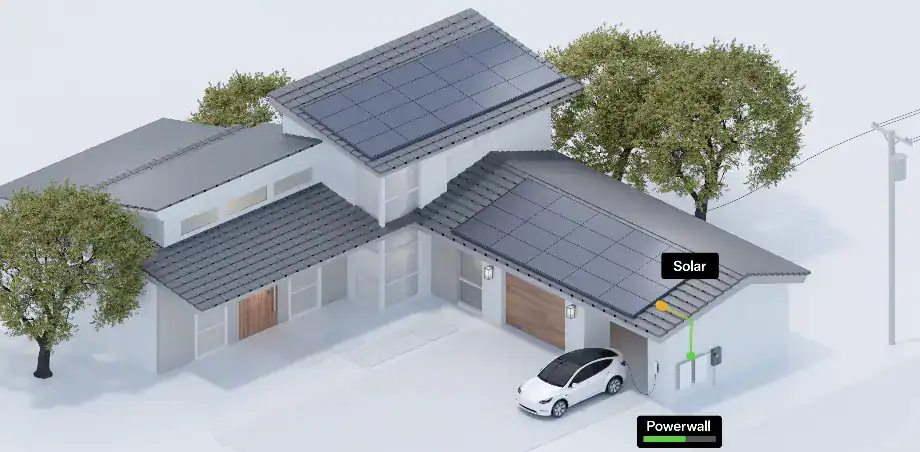
During daylight hours, the solar array produces electricity for the home. Excess solar energy can charge Powerwall 3 and, once home demand and battery objectives are satisfied, may be exported to the utility when the system configuration and utility rules allow it.
At night or during an outage, Powerwall 3 supplies stored energy. If the outage continues, the solar array can produce energy the following day to power the home and recharge the battery. Actual performance depends on sunlight, weather, array size, battery state of charge, and household consumption.
Powerwall 3 can also be installed as a home battery backup without adding solar panels. While utility service is available, the battery charges from the grid and maintains a configurable energy reserve. When an outage occurs, backup operation begins automatically — appropriate for homeowners who want quiet, automatic protection but aren't ready to install solar.
When installed without solar panels, Powerwall 3 functions exclusively as a home backup battery. Because it does not generate electricity, its backup capacity is limited to the energy stored in the battery — during an extended outage, it typically cannot recharge until utility service is restored.
A Powerwall system may be configured for whole-home backup or for a selected group of essential circuits. That decision shouldn't be based only on the home's service rating — a 200-amp electrical service doesn't mean the home continuously consumes 200 amps. We evaluate actual power demand, daily energy use, motor-start requirements, and your priorities before recommending a system.
One Powerwall 3 may have enough output to operate certain large loads, but that doesn't mean it can run every large appliance at the same time or sustain them for many hours. Additional Powerwall units, expansion batteries, load controls, or a dedicated backup-load panel may be required.
There's no honest single-number answer. Runtime is estimated by comparing the available stored energy with the home's average demand during the outage, while accounting for system losses, reserve settings, and operating conditions.
A battery with 13.5 kWh of nominal capacity supporting an average 1 kW load would have a theoretical duration of approximately 13 hours, before accounting for losses and reserve. At a continuous 3 kW demand, the duration would be much shorter. Air conditioning, electric water heating, cooking equipment, and EV charging can change the result dramatically.
As part of the evaluation, we estimate expected backup time using the circuits you want to protect, available consumption data, and realistic operating assumptions. We do not promise "all-night backup" or "whole-home backup" before completing that analysis.
We determine the project scope — solar plus storage, battery-only backup, whole-home or selected loads — and desired backup duration.
We inspect the meter, service disconnect, panels, breaker space, grounding, mounting surfaces, and conduit routes.
We evaluate demand and motor-start current to determine unit count, backup scope, equipment location, and one-line diagram.
We identify equipment, electrical work, backup scope, permitting responsibilities, and any exclusions.
We prepare the documents required for review by the applicable building department and utility.
We mount equipment, install raceways and conductors, complete wiring, install metering, and apply required labels.
We start and commission the system, verify communications and battery operation, and test backup response.
We coordinate inspections and address corrections. Grid-connected projects may also require utility Permission to Operate.
We walk you through the Tesla app — energy flow, backup reserve, operating modes, and recommended outage practices.
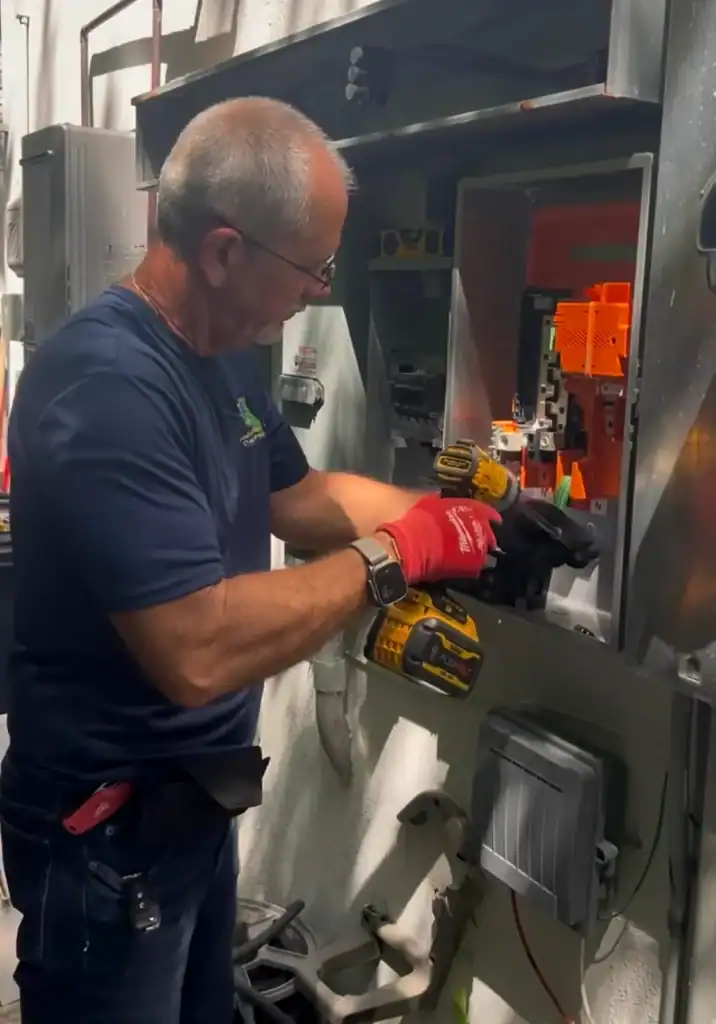
A battery installation involves far more than mounting equipment on a wall — it requires evaluating the service, protection coordination, load planning, code-compliant placement, permitting, safe electrical connections, system programming, and final testing.
On-site electrical assessment and backup design based on actual household loads.
Powerwall 3 installation with or without solar panels.
Permit and inspection coordination when included in the contract.
Professional commissioning and homeowner orientation.
A clearly defined list of backed-up loads and project exclusions.
Yes. It can charge from the utility grid and provide automatic backup during an outage. Without solar, it normally cannot recharge while the grid remains down.
It depends on simultaneous power demand, daily energy use, motor-start requirements, and desired runtime. Some homes work with one unit and careful load management; others need multiple units, expansion batteries, or a separate essential-load panel.
Often it can, but the specific HVAC equipment must be evaluated — compressor starting current, running power, and other simultaneous loads all matter. Compatibility isn't promised without reviewing equipment nameplate data.
Runtime depends on your average load, not just battery size. A properly integrated solar system may also recharge Powerwall during daylight hours when production exceeds demand — weather, array size, and consumption all affect the result.
Tesla publishes a 10-year limited warranty for Powerwall 3, subject to its current terms, registration requirements, operating conditions, and exclusions. Equipment warranty and our workmanship warranty are stated separately.
Yes. We install Level 2 EV chargers, Tesla Wall Connectors, dedicated circuits, and related electrical upgrades for residential and commercial properties.


Contact us to schedule service or request a free estimate. Our team is ready for your next project.

